
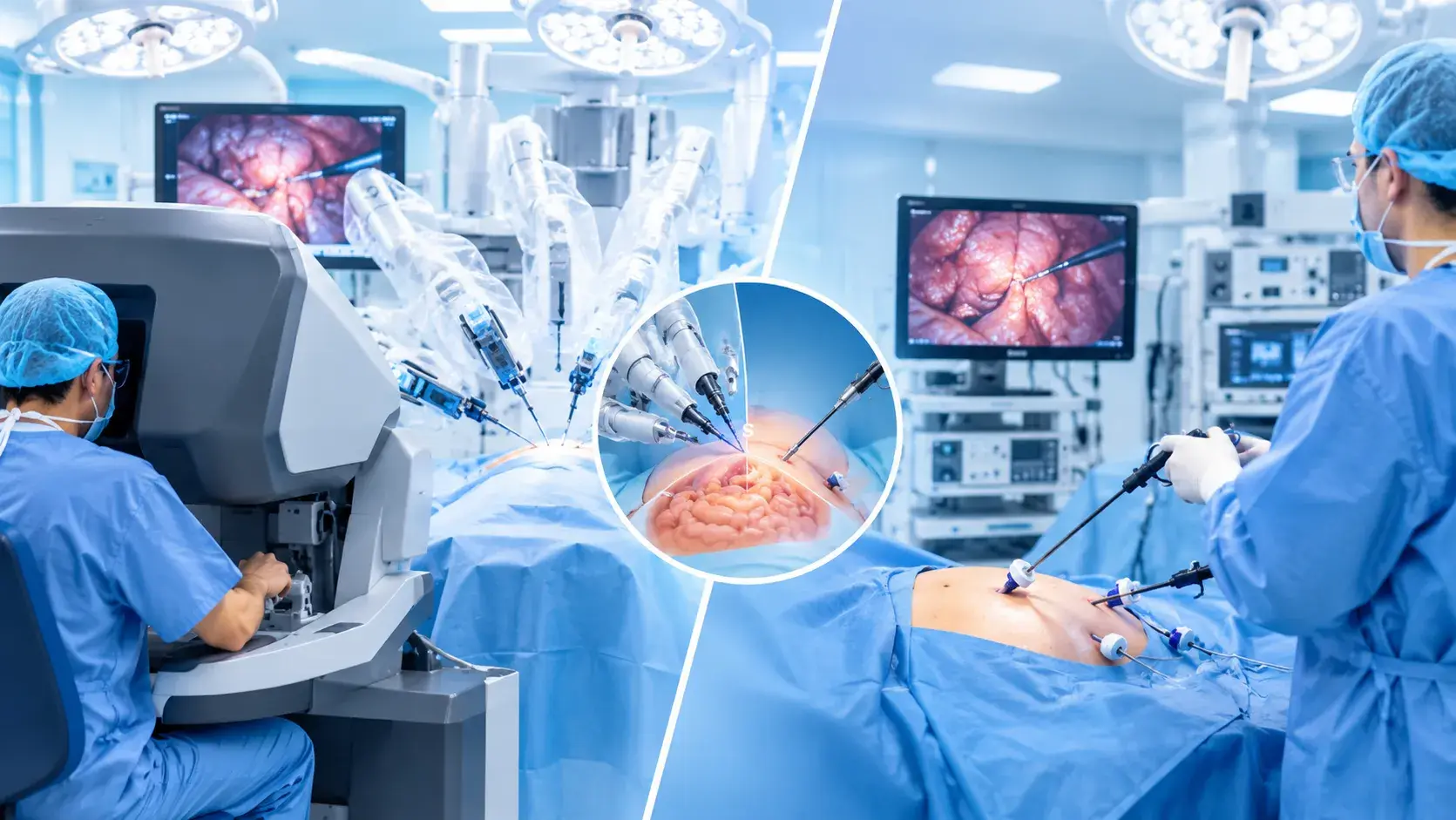

Surgery has come a long way from large incisions and lengthy recoveries. Today, robotic and laparoscopic techniques allow surgeons to perform many procedures through small openings, often making the recovery experience easier for patients. But these two approaches are not identical as their instruments, level of control, benefits, and suitability can differ. Understanding those differences can make a conversation with your gastrologist in Ahmedabad much more useful.
Here’s The Difference Between Robotic Surgery & Laparoscopic Surgery!
1) The Main Difference
Laparoscopic surgery uses a small camera and specialised instruments inserted through several small incisions. The surgeon directly controls these instruments while watching the procedure on a monitor. Robotic surgery follows a similar minimally invasive approach, but the surgeon operates from a console that controls robotic instruments. The robot does not perform the operation independently; it translates the surgeon’s movements into precise instrument movements.
2) Where Robotic Surgery Stands Out?
Robotic systems can provide surgeons with enhanced instrument flexibility, magnified three-dimensional views, and precise control during technically demanding procedures. The instruments can also make certain movements easier in confined spaces. These features may be particularly useful for complex operations where precision matters. However, having robotic technology available does not automatically make it the better option for every patient or every surgical procedure.
3) Why Does Laparoscopic Surgery Remain Popular?
Laparoscopic surgery has been used successfully for many years and is an established option for numerous procedures. It generally involves smaller incisions than traditional open surgery, which can mean less postoperative discomfort, smaller scars, and a potentially quicker recovery. It also avoids the need for a robotic system, making it a practical choice when the procedure can be performed effectively using conventional laparoscopic instruments.
4) Which One Offers Better Recovery?
Both techniques are minimally invasive, so recovery can often be easier than with comparable open procedures. However, recovery depends heavily on the operation being performed, the patient’s overall health, and whether complications occur. Robotic surgery is not automatically associated with a faster recovery than laparoscopy. The most suitable technique is the one that allows the surgeon to safely and effectively complete the specific procedure.
5) Which Surgery Is Right For You?
There is no universal winner in the robotic-versus-laparoscopic debate. The decision depends on the condition being treated, surgical complexity, the surgeon’s experience, available technology, and individual patient factors. Speaking with a qualified specialist, such as a gastrologist in Ahmedabad when dealing with a gastrointestinal condition, can help clarify the available approaches. Your surgeon can explain the expected benefits, risks, costs, and recovery for your particular case.
In Conclusion
Robotic and laparoscopic surgery share the goal of performing procedures through smaller incisions, but they use different technologies and offer different capabilities. Robotic surgery can provide additional precision and flexibility in selected complex procedures, while laparoscopy remains a highly effective and established approach. Instead of focusing on which sounds more advanced, focus on which technique is safest and most appropriate for your individual surgical needs.
Looking for the right medical guidance? Book your consultation with Kaizen Hospital today!