

Hearing the words “your treatment is complete” brings immense relief. After months of surgery, chemotherapy, or other treatments, many people look forward to getting back to normal life. But one question often lingers in the background: Can colon cancer come back?
The honest answer is yes, it can. However, a recurrence doesn’t happen to everyone, and regular follow-up care plays a huge role in detecting any problems early. Understanding why recurrence happens and how to stay proactive can help patients feel more confident after treatment.
What Does Cancer Recurrence Mean?
A recurrence means that cancer has returned after treatment and after a period when no signs of the disease were detected. It doesn’t necessarily mean the treatment failed. Sometimes, a small number of cancer cells remain in the body even after successful treatment. These cells may be too tiny to detect during scans or tests and can grow over time.
Colon cancer may return in the same area where it first developed, in nearby lymph nodes, or in other organs such as the liver or lungs.
Who Is More Likely to Experience Recurrence?
Several factors influence the risk of recurrence. Patients diagnosed at an advanced stage generally have a higher chance of cancer returning than those diagnosed early.
Other factors include:
- The size and stage of the original tumor
- Whether cancer had spread to nearby lymph nodes
- The type and aggressiveness of the cancer cells
- Overall health and response to treatment
- Whether the full treatment plan was completed
Every patient’s situation is different, which is why doctors create personalized follow-up schedules.
Symptoms You Should Never Ignore
Many people worry about every ache or pain after treatment. Fortunately, not every symptom means cancer has returned.
Still, it’s important to speak with your doctor if you notice:
- Blood in the stool
- Persistent abdominal pain
- Unexplained weight loss
- Changes in bowel habits lasting several weeks
- Ongoing fatigue
- Loss of appetite
Early evaluation can make a significant difference if recurrence is detected.
Why Follow-Up Care Matters
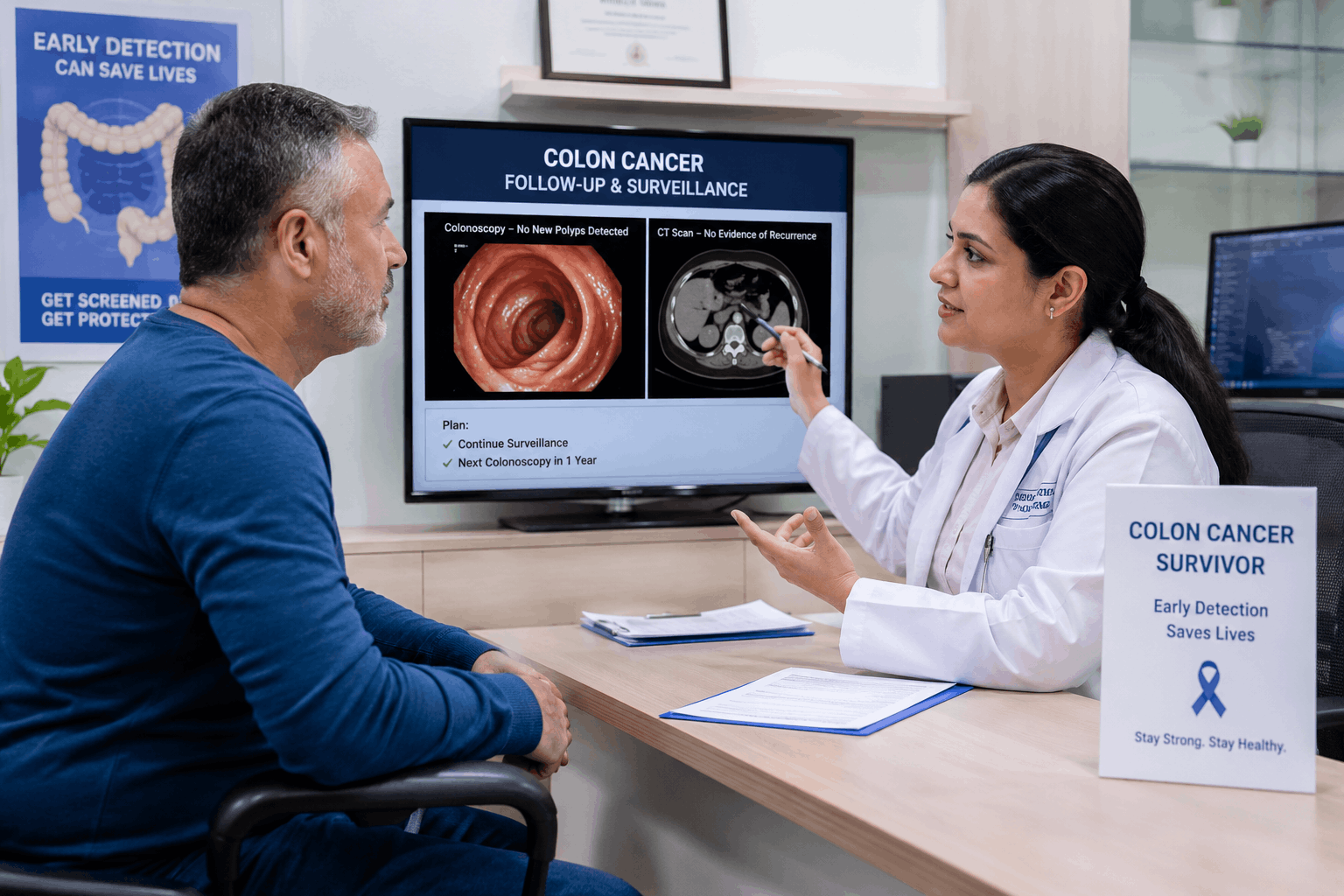
Finishing treatment isn’t the end of your cancer journey. Regular check-ups help doctors monitor your recovery and identify any signs of recurrence before symptoms become severe.
These visits may include physical examinations, blood tests, imaging scans, and periodic colonoscopies. Sticking to the recommended schedule gives you the best chance of catching problems early, when they are often easier to treat.
Patients seeking Colon Cancer Treatment in India are increasingly benefiting from structured follow-up programs that combine advanced diagnostics with personalized care.
Advanced Colon Cancer Care at Kaizen Hospital
Choosing the right medical team can make a meaningful difference throughout diagnosis, treatment, and long-term follow-up. Established in Ahmedabad in 2011, Kaizen Hospital was founded with a vision to deliver world-class healthcare through advanced medical technology, research, education, and clinical excellence. Today, it is recognized as one of Western India’s first and largest gastroenterology super-specialty hospitals.
As a NABH-accredited institution, Kaizen Hospital offers specialized gastrointestinal care supported by experienced gastroenterologists, skilled gastro surgeons, and advanced minimally invasive surgical techniques. Equipped with Gujarat’s first Visera Elite III installation, the hospital provides comprehensive diagnosis, treatment, and ongoing care for patients with colorectal diseases.
If you’re exploring Colon Cancer Treatment in India, Kaizen Hospital combines cutting-edge technology, multidisciplinary expertise, and compassionate patient care to support every stage of the cancer journey—from diagnosis to recovery and long-term surveillance.