

Hearing the word mesh before hernia surgery often makes people nervous. It’s one of the first questions patients ask: Will a mesh be used? Is it safe? Why do I even need it?
The truth is, surgical mesh has become an important part of modern hernia repair because it helps strengthen the weakened area and lowers the chances of the hernia coming back. When combined with Robotic Hernia Surgery, mesh placement becomes even more precise, giving patients better outcomes and a smoother recovery. Let’s break it down in simple terms.
What Is Surgical Mesh?
A hernia happens when an organ or tissue pushes through a weak spot in the muscles. Simply stitching the muscles together isn’t always enough, especially if the opening is large or the surrounding tissue has become weak.
That’s where surgical mesh comes in.
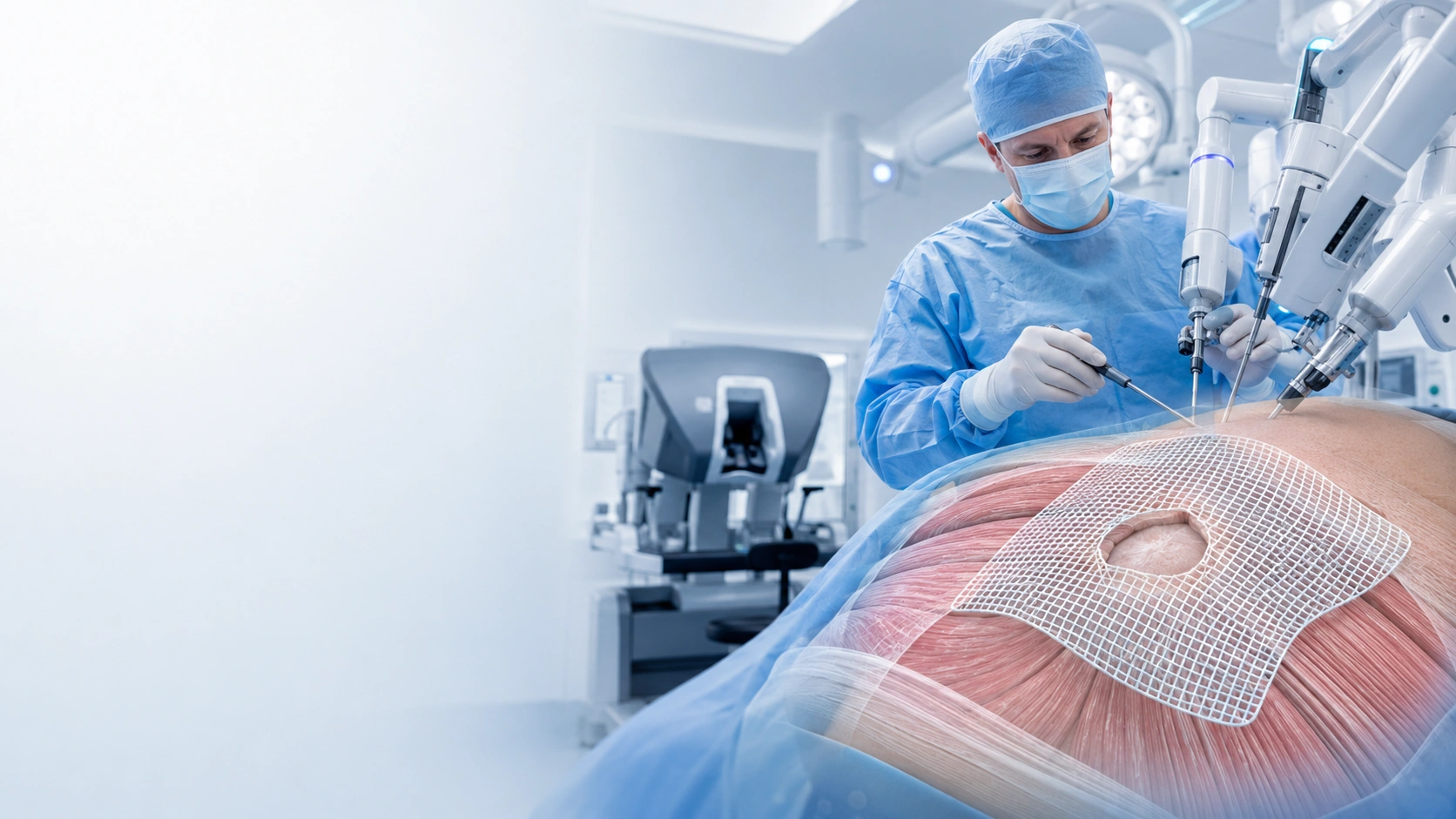
Think of it as a flexible support patch. It’s made from materials that are designed to work safely inside the body. Once placed, the mesh reinforces the weak area while your body’s natural tissue grows around it, creating a stronger repair over time.
The goal isn’t just to close the hernia. It’s to repair last.
Why Is Mesh Used in Hernia Repair?
Without additional support, the repaired muscle can sometimes weaken again. This increases the risk of the hernia returning.
Using mesh offers several benefits:
- Strengthens the weakened abdominal wall
- Reduces the risk of hernia recurrence
- Supports faster healing
- Works well for both small and large hernias
- Provides long-term durability
For many patients, mesh has significantly improved the success rate of hernia surgery.
How Does Robotic Hernia Surgery Improve Mesh Placement?
Technology has changed the way surgeons perform hernia repair.
During Robotic Hernia Surgery, the surgeon controls robotic instruments through a console. These instruments provide exceptional precision, flexibility, and a magnified 3D view of the surgical area.
This advanced approach allows the surgeon to:
- Position the mesh more accurately
- Repair the muscle with minimal tension
- Avoid unnecessary damage to nearby tissues
- Place stitches with greater precision
- Work through tiny incisions instead of a large cut
The robot doesn’t perform the surgery on its own. Every movement is fully controlled by the surgeon, with the robotic system simply enhancing accuracy and control.
Is Mesh Safe?
This is probably the biggest concern patients have.
The answer is yes, for most people, surgical mesh is considered safe and has been used successfully in millions of hernia repairs worldwide. Like any medical procedure, there are potential risks, including infection, discomfort, or recurrence, but these complications are relatively uncommon when surgery is performed by experienced specialists using the right technique.
Your surgeon will recommend the most suitable type of mesh based on your condition, overall health, and the location of the hernia.
Choosing the Right Surgical Team Matters
Mesh placement is only one part of a successful hernia repair. The experience of the surgeon and the technology available at the hospital are equally important.
If you’re considering Robotic Hernia Surgery, Kaizen Hospital in Ahmedabad offers advanced surgical care backed by expertise and innovation. Established in 2011, Kaizen Hospital is among Western India’s first and largest dedicated gastroenterology super-speciality hospitals and is NABH accredited. Equipped with cutting-edge technology, including Gujarat’s first Visera Elite III installation, the hospital is home to experienced gastro surgeons skilled in minimally invasive and robotic procedures. With a patient-first approach, world-class infrastructure, and a commitment to clinical excellence, Kaizen Hospital provides comprehensive care for hernia treatment, helping patients recover with confidence and return to their everyday lives sooner.